Before money existed, anyone wanting to trade something had to find a very specific person: someone who had exactly what you wanted and wanted exactly what you had to offer. Economists call this a double coincidence of wants, and it's a bigger problem than it seems.
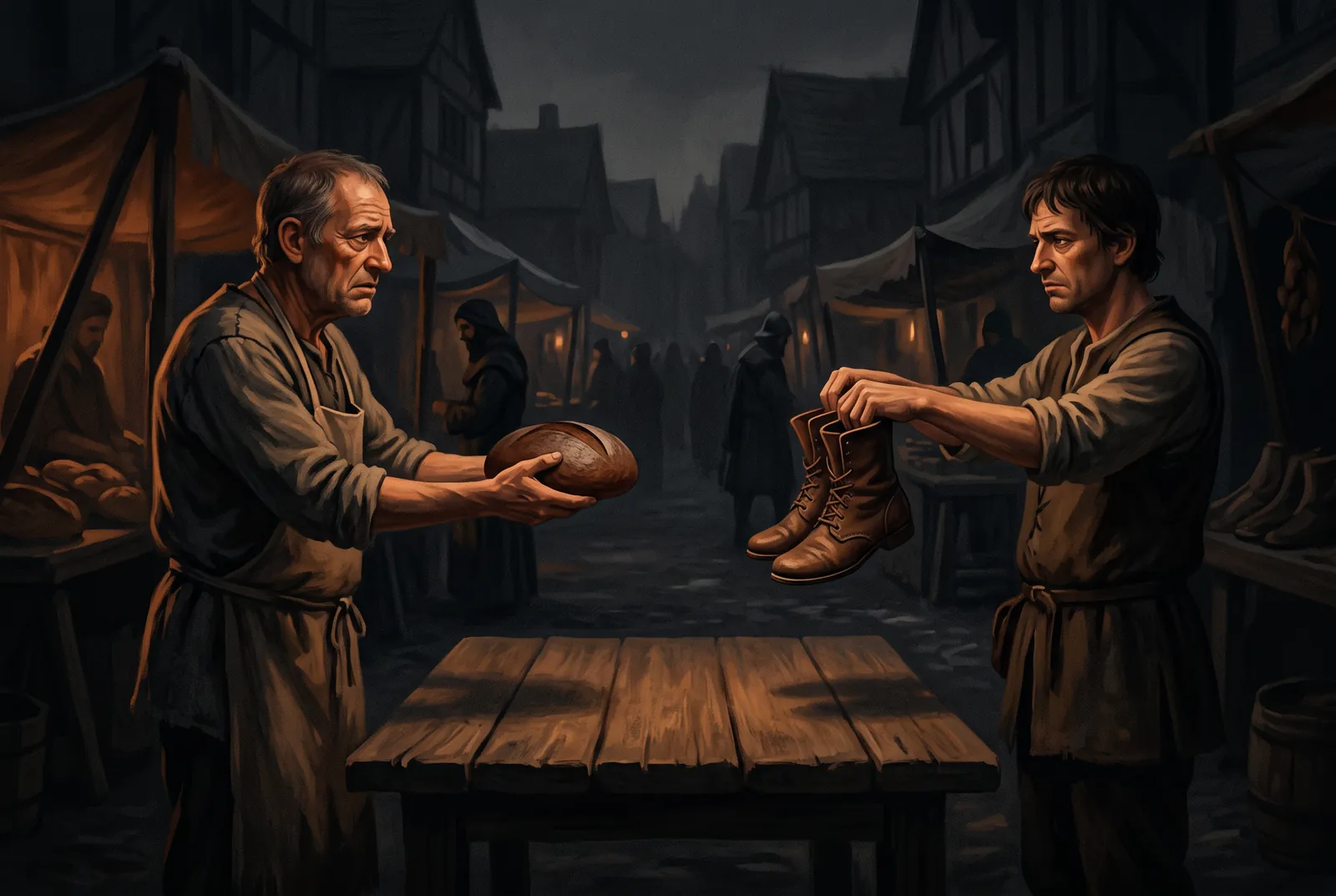
A baker who needs shoes has to find a shoemaker who is hungry. If the shoemaker has already eaten, or if he wants meat instead of bread, the trade doesn't happen—even if each one has, at some point, exactly what the other needs. Bartering works in a village of twenty people. It stalls in any economy larger than that.
Money is the solution to this problem, and it's more subtle than "someone invented coins." What happened, in practically all societies and without anyone coordinating it, was that a commodity began to be accepted not because people wanted it for use, but because they knew others would accept it later. This commodity became money.
Good money fulfills three roles at the same time, and it's worth separating the three because they fail in different ways.
The first is to be a medium of exchange. It's the most obvious role: money comes between trades and breaks the double coincidence into two independent halves. The baker sells bread to someone who wants bread and buys shoes from someone who wants to sell shoes. Neither needs to want what the other produces.
The second is to be a store of value. Bread spoils in three days, but a week's work needs to last longer than that. Money carries purchasing power from the present to the future. This is the role that inflation attacks, and it's the subject of Lesson 4.
The third is to be a unit of account. Without a common denominator, a market with 100 products has 4,950 exchange rates to memorize: how many eggs for a hammer, how many hammers for a goat, how many goats for a sack of salt. With money, there are 100 prices. Money is the ruler by which everything else is measured.
The list of what has served as money is long and uncomfortably strange, which is precisely the point. Nothing is money by nature: things become money when a large enough group starts treating them that way.
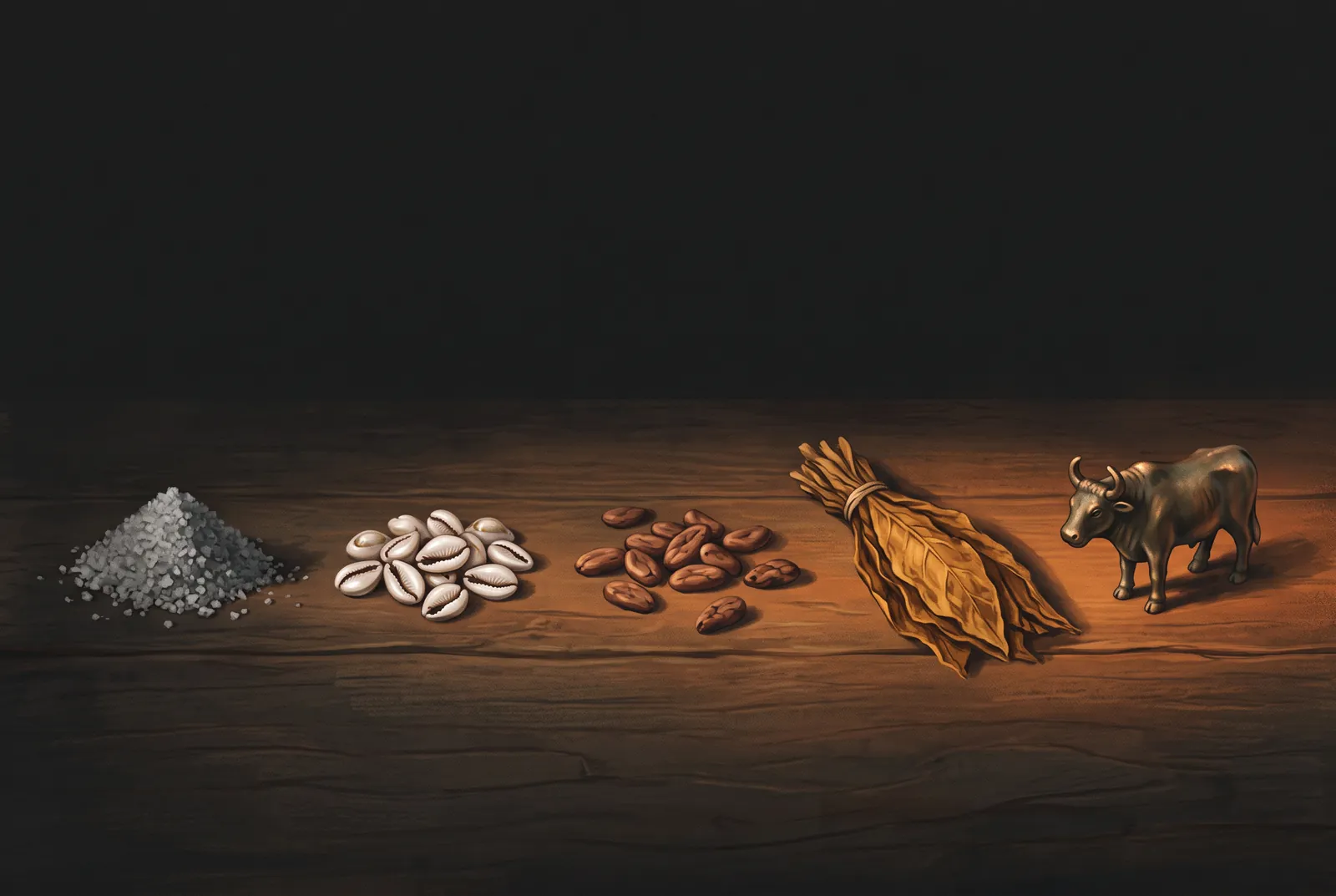
Salt, in the Roman Empire and West Africa—the word salary comes from the Latin salarium, linked to salt.
Cattle, in much of the ancient world. Pecunia comes from pecus, which is cattle in Latin.
Cowrie shells, which circulated for centuries in Asia, Africa, and parts of the Americas.
Cacao beans, in Mesoamerica, where they bought everything from a turkey to entire services.
Tobacco, in the English colonies of North America, where tobacco warehouse receipts passed from hand to hand as if they were notes.
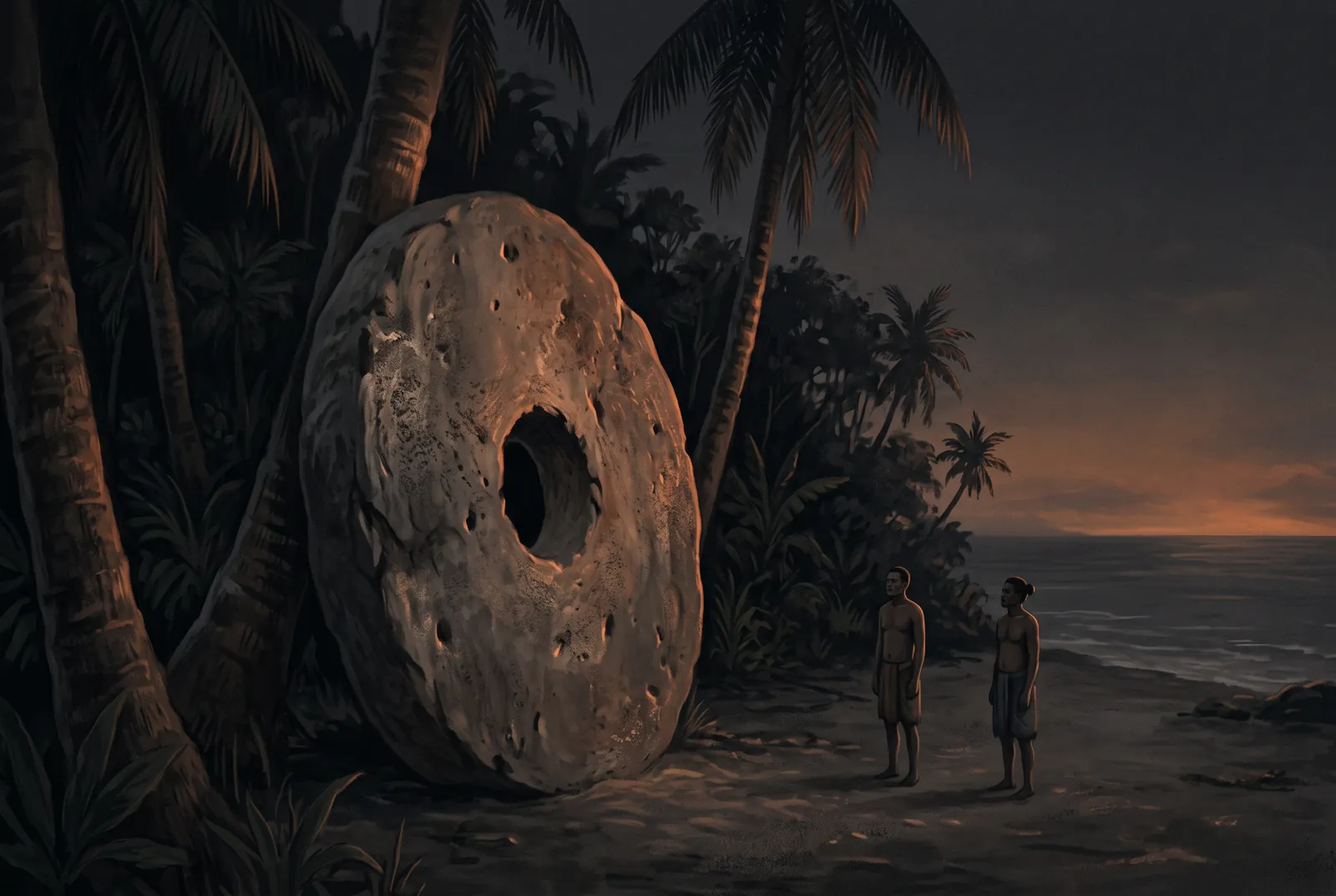
Limestone stones several meters in diameter on the island of Yap in the Pacific—too large to carry, so ownership changed hands without the stone moving. Keep this example in mind: it returns in Lesson 3.
None of these things were decreed money by a government. They all became money because they had, in their context, the right properties: they were reasonably scarce, difficult to counterfeit, accepted by many people, and transportable enough for the size of the market in which they circulated.
If money were only what a government declares to be money, there wouldn't be much to discuss—and there wouldn't be Bitcoin. History tells a different story: money is a technology, it changes when a better option appears, and "better" has criteria that can be listed and compared.
In the next lesson, these criteria in action: why metal beat salt, why paper beat metal, and what exactly happened in 1971.