Almost everyone thinks they know what a bank is: a place where money is stored. This description is wrong, and understanding why it is wrong explains much of the modern world.
When you deposit a thousand reais, the bank does not set aside a thousand reais and put it in a drawer with your name on it. It records that it owes you a thousand reais and lends most of that amount to someone else. This is the fractional reserve system: only a fraction of deposits is kept available, and the rest is lent out. The balance that appears in your app is not stored money; it is a debt the bank owes you.
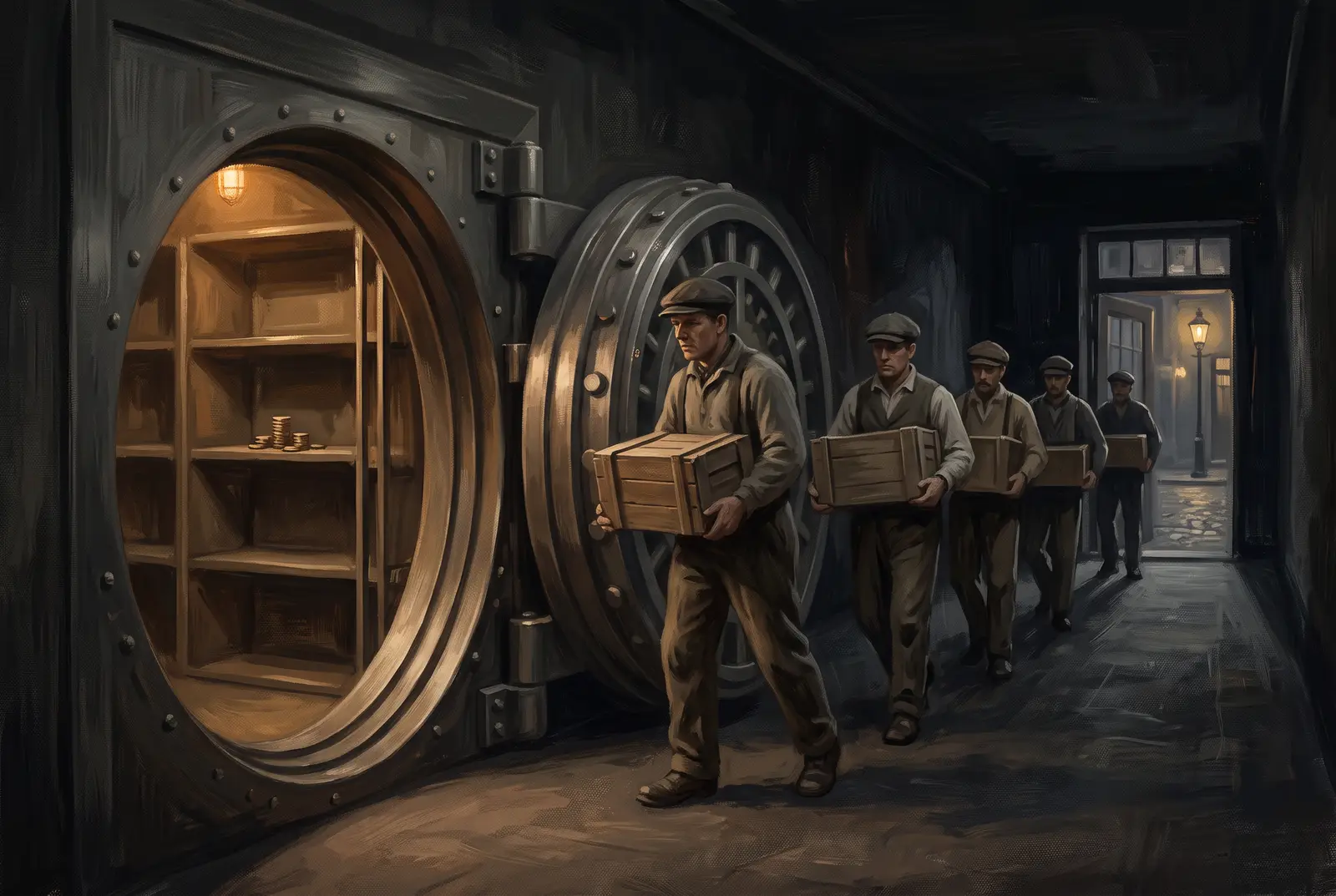
The next step is what usually surprises people. When the bank grants a loan, it does not take money from a vault: it credits the borrower's account, and this credit is a new deposit that did not exist before. It is the very act of granting the loan that creates the deposit. Most of the money in circulation in a modern economy was not printed by anyone — it was created by commercial banks when they lent it, and it disappears when loans are repaid.

Above commercial banks is the central bank, which controls the system's temperature. It sets the basic interest rate, requires a minimum reserve percentage, lends to banks when liquidity is lacking, and buys or sells securities to put money into or take money out of circulation. It is the central bank that decides, in practice, how cheap credit is — and cheap credit means new money coming in.
The arrangement has real virtues, and it's worth recognizing them. Savings that would remain idle finance houses, factories, and businesses. Payments occur between strangers who have never met. Fraud has a place to be reported, and wrong transfers are sometimes reversed.
But this entire arrangement rests on a single assumption: that depositors will not want their money all at once. And this is where the problems lie.
The first is counterparty risk. Your balance is a promise from an institution, and promises depend on the issuer remaining solvent. If the bank fails, what you have is a place in the line of creditors. There are deposit insurances to contain panic, but they have limits and are paid by a fund that is also finite.
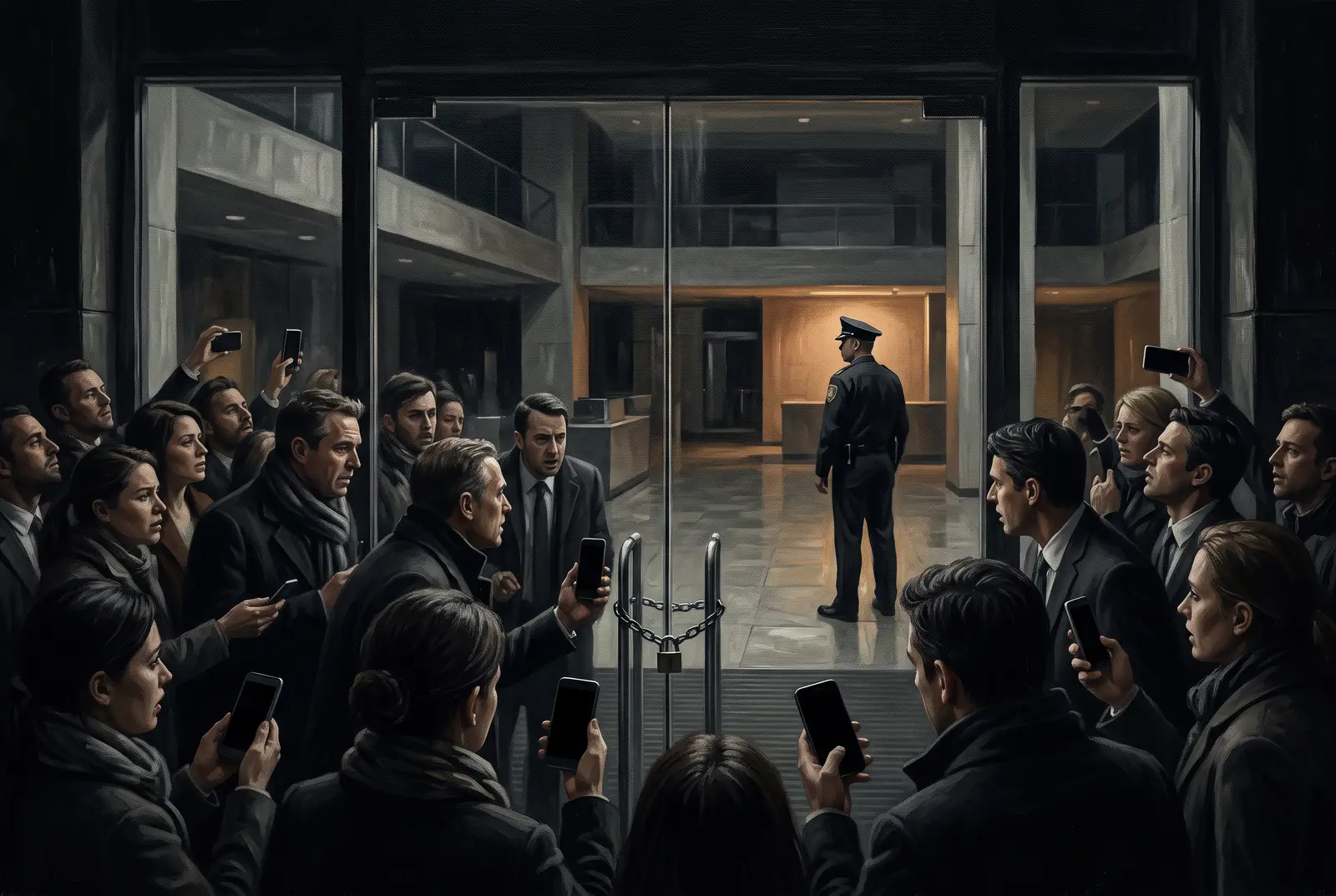
The second is a bank run. Since only a fraction is available, just the suspicion that a bank cannot withstand withdrawals is enough for everyone to try to withdraw at once — and then no bank can withstand it, not even the healthy ones. It's a self-fulfilling prophecy, and it's not ancient history: in 2023, Silicon Valley Bank went from solid to liquidated in just over 48 hours, with withdrawals triggered by messages on social media.
The third is custody. While the money is in the bank, the bank has immediate control over it. Accounts can be blocked by court order, suspicion of fraud, international sanctions, or system errors — and the account holder finds out later when trying to pay for something. It's not necessary to judge each case to recognize the structural fact: access to your own money depends on a third party's permission.

The fourth is unequal access. A large part of the world's population does not have a bank account, whether due to lack of documents, nearby branches, or income that justifies the bank's cost. Sending money between countries, then, goes through a chain of intermediaries that charge high fees and take days — precisely for those who can least afford it.
And the fifth, which ties everything together: the system can be expanded by decision. If lending is creating a deposit, and if the cost of credit is defined by policy, then the amount of money in the economy results from institutional choices, not a physical limit. You do not vote on these choices, but you pay for them with the purchasing power of what you saved — which is exactly the previous lesson.
None of this describes a malicious system. It describes a system with assumptions, and assumptions fail. The next lesson is about the time they all failed at once, in 2008 — and about the nine-page document that appeared in the midst of that failure.