Look for Bitcoin's headquarters. It doesn't exist. There is no company, no board, no address to send a subpoena to, and no button for anyone to press. This is often repeated as a slogan, and it is a literal description of the arrangement. But saying that no one is in charge doesn't explain who makes the decisions — and someone does decide.
The creator was the first to leave. Satoshi participated in the forums until the end of 2010, handed over access to the repository to Gavin Andresen, sent a final message in April 2011 saying he had moved on to other things, and never appeared again. The bitcoins he mined in the beginning remain untouched, without a single spend, to this day. Fifteen years later, the network hasn't missed him.
There is, indeed, a program. Most of the network runs Bitcoin Core, an open-source software with a handful of maintainers who can record changes in the repository. It seems like a center of power, and it would be if installing the update weren't voluntary. No one can push a new version onto your computer. A rule that nodes don't run isn't a rule: it's a suggestion within a file.

That's why the user's node is the political piece of the network. It doesn't vote, sign petitions, or send messages. It does one thing only: it rejects what doesn't follow the rules it's running. A block with an invalid transaction is discarded. A block that creates too many bitcoins is discarded. It doesn't matter how much it cost to produce it.
The miner, as shown in Lesson 4, burns electricity on an industrial scale and has exactly one power: choosing which transactions go into the block he assembles and in what order. It's a real power, and there are serious discussions about censorship through this means — he can leave your transaction out. But he doesn't legislate. If he assembles a block that breaks a rule, the work becomes trash, and the electricity doesn't come back.
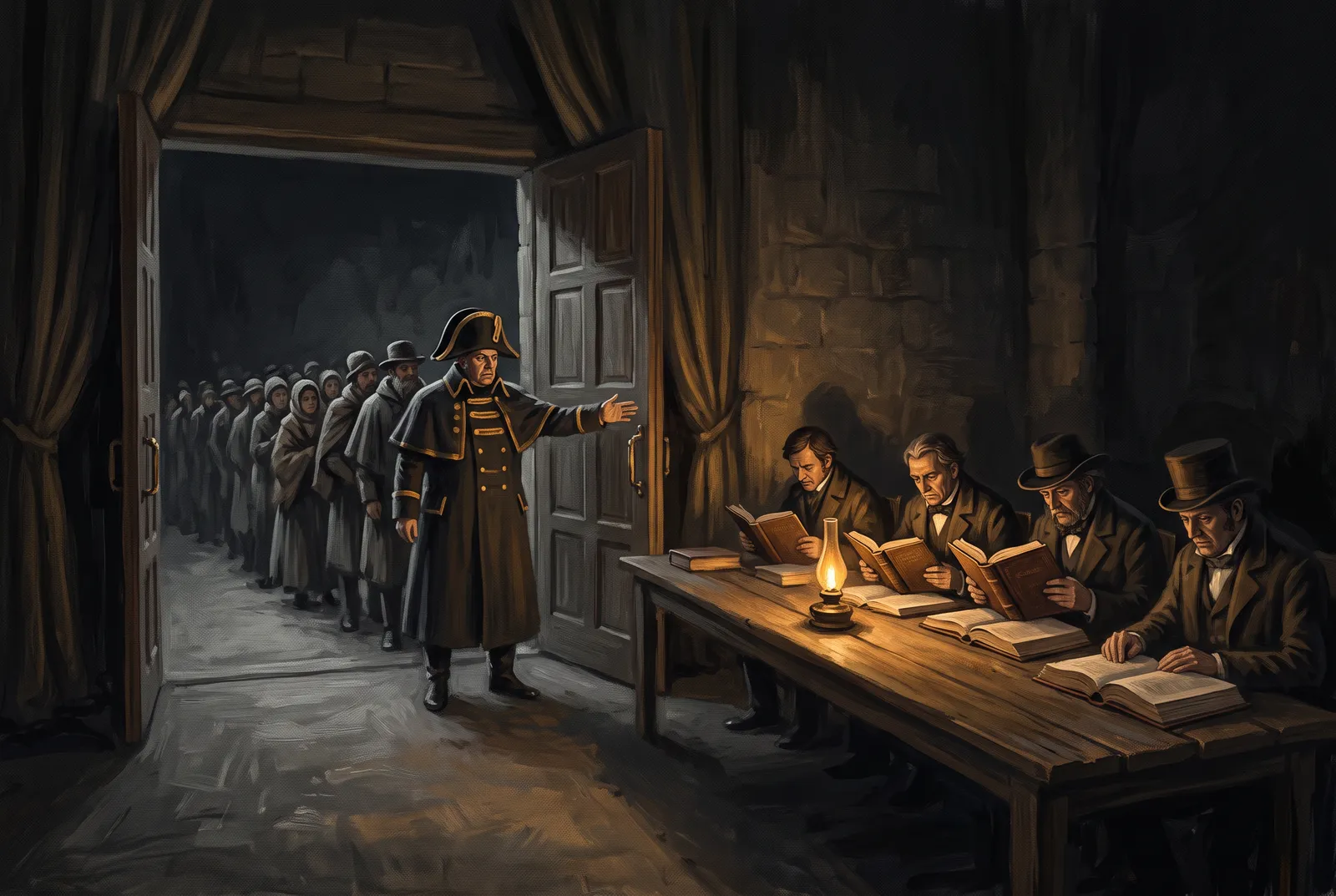
Proof of this happened publicly in 2017. In May of that year, fifty-eight companies — exchanges, payment processors, and pools that made up most of the world's computing power — signed an agreement in New York to double the size of the blocks. On one side were almost all the money and almost all the mining. On the other were node operators, who only needed to not install anything to win. In November, the agreement was canceled, never having come into effect.

Those who truly disagree have a way out, and it was also used that year. On August 1, 2017, a group went ahead with their own rules and created a separate network, Bitcoin Cash. No one was prevented from doing this, and no one was forced to join. This is how Bitcoin changes when there is no agreement: not by convincing a committee, but by building another road and seeing who follows it. The mechanics of these splits have an entire lesson in the intermediate track.
None of this puts the arrangement above criticism, and three points are legitimate. Half a dozen pools direct most of the mining, which concentrates the choice of order in very few hands. Almost everyone runs the same implementation, which gives its maintainers disproportionate influence even without any formal power. And running a node is something for the minority: those who don't run one are trusting those who do, which is quite different from verifying.
The practical result is a system difficult to change by design. It's a virtue when it protects a rule you want to keep, and a flaw when it blocks a fix that almost everyone wants. Both things are true at the same time, and that's the price of having no one in charge.
This module explained what the network does. The next is about your part in it: wallet, key, address, fee — and the mistakes that can't be undone.